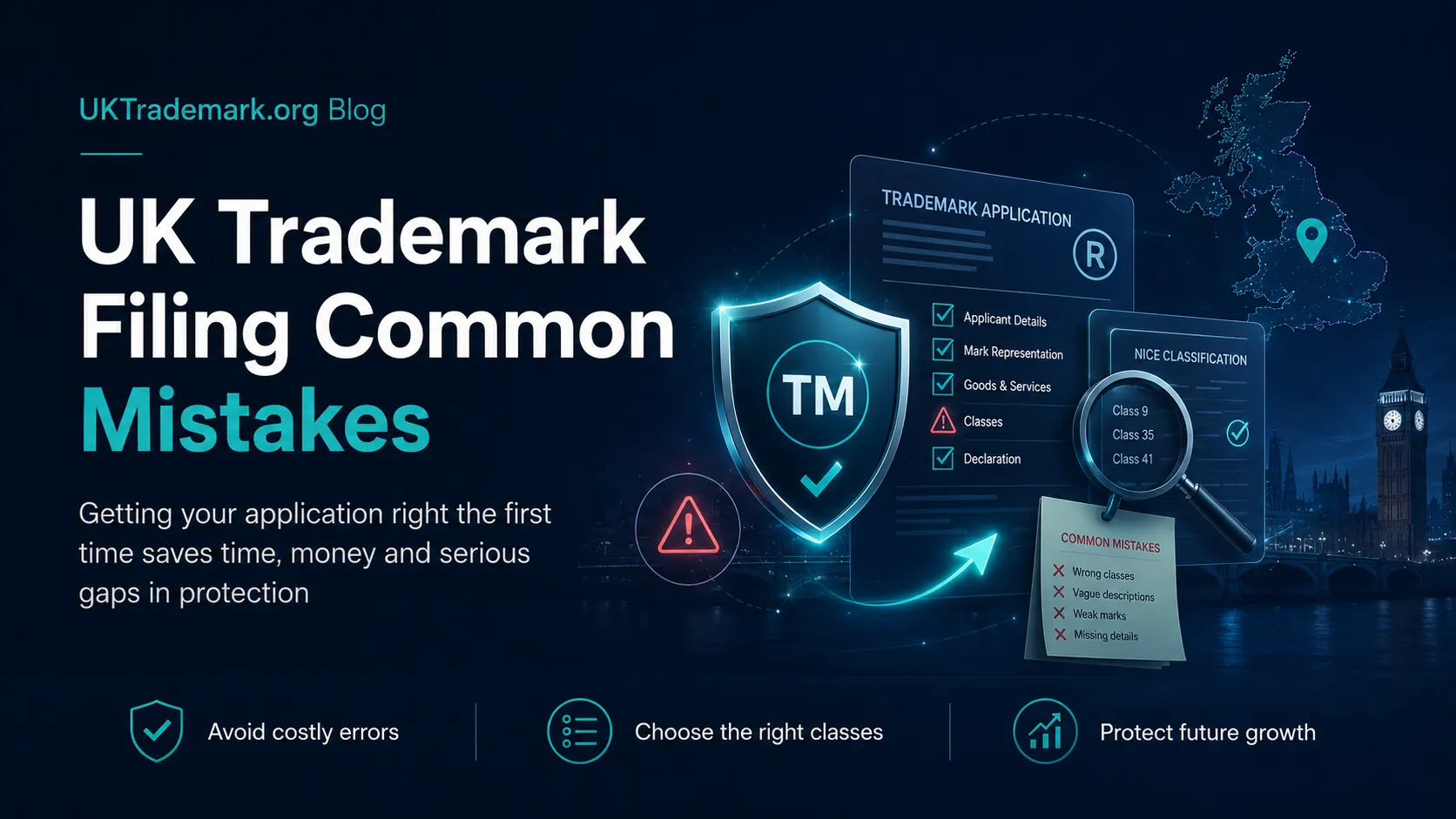
Getting the application right first time can save money, reduce delays and help ensure the registration reflects how your brand operates now and where it may grow next.
But this approach can leave dangerous gaps. And in the world of UK trademarks, those gaps can be expensive to fix later — or worse, they can be exploited by competitors.
Why Classification Matters More Than Most People Realise
When you apply for a UK trademark, you don’t just register your name. You also have to specify the classes of goods and services your trademark will cover. There are 45 classes in total, covering everything from clothing and beauty products to education, software, and financial services.
Many business owners only think about the obvious classes related to their main activity. This is completely understandable — but it can be risky.
If you miss important classes that relate to what you actually do, or plan to do in the future, parts of your business may remain unprotected. A competitor could then register a similar mark in those missing classes and legally operate in areas you thought were covered.
The Cost of Getting It Wrong
Getting your classifications wrong can lead to several painful outcomes:
- You may have to file a completely new trademark application later, starting the process and paying fees all over again.
- You could discover too late that a key part of your business isn’t protected.
- Competitors could legally use similar branding in areas you missed.
- You might face opposition or legal challenges that could have been avoided.
In short, getting it wrong the first time often costs more time, more money, and creates unnecessary stress.
Busy Business Owners and “Blind Spots”
Most business owners are not trademark experts — and they shouldn’t have to be. Their focus is, quite rightly, on running and growing their business.
This is why many people only protect what feels most obvious. They register their trading name in the main class they operate in and assume that’s enough. Unfortunately, this often leaves room for “leakage” — areas where a competitor could step in and register similar branding.
These blind spots are particularly common when businesses plan to expand into new products, services, online courses, merchandise, or franchising in the future.
Why Seeking Proper Advice Saves You Money in the Long Run
Working with someone experienced in UK trademarks can make a significant difference. A good advisor doesn’t just file your application — they take the time to understand your full business, including:
- What you do now.
- What you plan to do in the next 3–5 years.
- Any related activities that might need protection, even if they’re not your main focus yet.
This forward-thinking approach means the right classifications can be included from the very first filing. It saves you from having to start the process again later and reduces the risk of competitors exploiting areas you hadn’t thought to protect.
How UKTrademark.org Approaches This Differently
At UKTrademark.org, we don’t just ask for your business name and file an application. We take the time to understand your full operation and future ambitions.
Our process includes a proper review of your current activities and a 5-year growth planning discussion. This helps us identify not only the classifications you need today, but also those you’re likely to need as your business evolves.
By getting the classifications right from the start, we help our clients avoid the common and costly mistake of having to re-apply later. It also gives them stronger, more comprehensive protection against competitors who might otherwise exploit any gaps.
The Smart Approach
Getting your UK trademark right the first time isn’t just about saving money on fees. It’s about protecting your entire business — now and in the future — and removing opportunities for competitors to take advantage of any areas you may have overlooked.
Prepare Your UK Trade Mark Application Properly
Before filing, review the owner, wording, goods and services, and your five-year growth plans. Careful preparation now can prevent avoidable costs and protection gaps later.
Don’t leave room for competitors to exploit what you haven’t protected. Get it right from the beginning.